
So far, there has been no computer built that is faster than the brain and the nervous system. It may seem like they process faster than humans do, but they don’t. Yes, they can calculate a math problem faster than most, but they can’t send signals like our brain and nervous system does with such speed. There is a world–a whole ecosystem–that operates within and behind one’s eyes and in one’s flesh and as one’s flesh. Bodies are built “cunningly” and with forethought. They are designed for more self-care than one realizes. Or, at least they try as hard as they can.
What humans need is to tap into the ecosystem that controls much of what one does anyway and learn to live with it, as much as it must learn to live with free will and thought. In the end, the mind is powerful and an organ to use more than one would think.
The Soul unto itself (683) by Emily Dickinson (1830 to 1886)
The Soul unto itself
Is an imperial friend –
Or the most agonizing Spy –
An Enemy – could send –
Secure against its own –
No treason it can fear –
Itself – its Sovereign – of itself
The Soul should stand in Awe –
The “Soul”, according to Dickinson, is so powerful that it should stand in awe of itself. The soul, I see, is one’s own perspective on the world, the part that thinks, wonders, evaluates, remembers and forgets, etc. The brain, chemistry, nerves, and so on may be a system that makes it happen, but it can’t entirely explain the mystery that is the human experience and perspective. Its only limitation is itself. It is wholly a miracle that people experience the world in 3-dimensional splendor and develop a personality. However, no one can truly know a person because the soul has depths that even the one experiencing the world has trouble accessing (the unconscious). If I can’t fully articulate the depths of my being, how could another person possibly know it? Simply put, they can’t know it all. Thus, taking the effort to be at least a part of one’s soul or trying to understand someone’s personal perspective is an ultimate act of love. Empathy is required.
All of this is to say that people are trapped in their own perspective of the world, or one’s mind. This isn’t to reiterate that no one truly knows a person and that as individuals, a person is really alone in their own world and perspective; it is to say that the experience one encounters is truly one’s own. Of course, people internalize the outside world, but I see it as more like Freud’s superego. While one internalizes outside perspectives and voices, the internalized is just that–reconstituted for one’s own mind. Therefore, it ceases to be external or “the other” and becomes one’s own perspective. You own the world that you experience.


As much as one is a “prisoner” of one’s soul, consciousness, or perspective, the “prison” in this scenario or the Sovereign that Dickinson describes, belongs to oneself. Sure, there are boundaries and restrictions to exploring the external world, and maybe even locks on doors in the deepest of dungeons of the mind, but the “prison” is the self. It is, after all, where one lives and breathes and I can claim it.
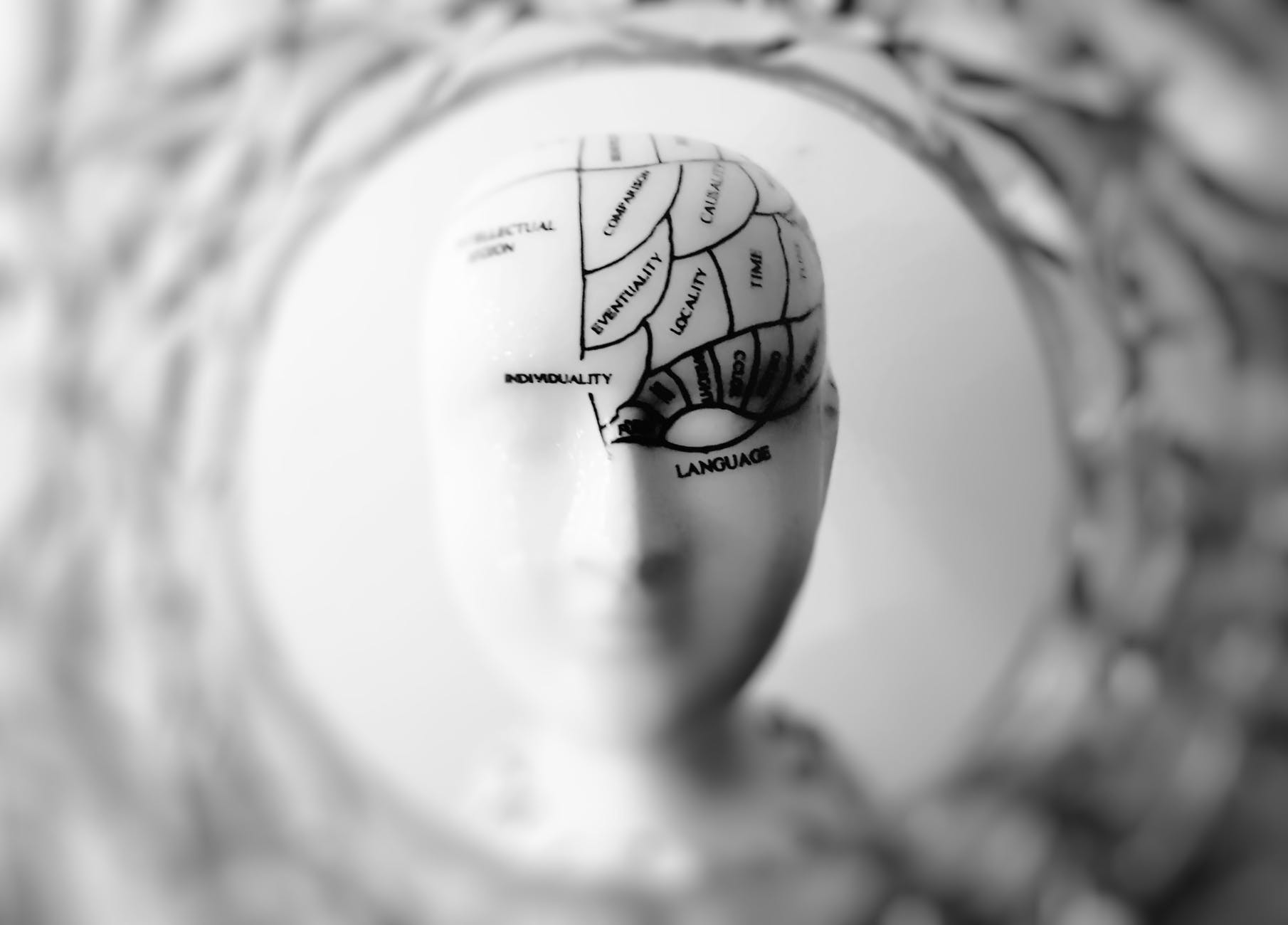
I know I make it sound like it is easy to just claim one’s mind and take over what one thinks and feels. It’s not a simple thing because the brain is complex, and feelings can be unpredictable. It is hard to be the warden of the “prison” when you’re also facing the bars. But it’s not impossible.
She happened to be one of many therapists that I would start with and then never see again. Her office was like the others, well-appointed with just a hint of her taste and the rest “American professional” office outfitted. A sweet face stared back at me, a touch of apprehension stretching the edges of her mouth, her leg crossed tightly over the other with a clipboard balancing on a slight thigh, pen ready to record the tears I would shed. I always cried. It’s not something I like about myself. However, I have this aversion to anger; therefore, when I’m angry, I cry. When I’m sad I get quiet and might cry, too, but the real “ugly” crying happens when I’m mad. Anger doesn’t agree with my laid-back nature, so it becomes a physically taxing thing for me. I will have monster headaches after I’ve let out steam or had an argument. I’m sure I look like a big ol’ baby having a tantrum when I get really mad because I will start balling and my voice becomes shrill…it’s not pretty.
This particular therapist leveled a blank if not slightly sympathetic look at me as she asked me the usual questions that start a session when the counselor doesn’t know the client yet. I cry and I state how chaotic things feel, the panic attacks, the anger for no reason, etc., etc…That’s when she leaned toward me, her eyes alive and flashing, and stated emphatically, as if it were solid fact already, “You have to talk to yourself. Tell yourself that the thoughts are not true and that you’re fine.”
I have nothing against therapists, though I had not found one that would keep my attention. I was a social worker and counselor and had gone to graduate school to get my license to be a therapist (before I changed to Education). For someone like myself, I can’t feel that I’m just a number or that there isn’t an agenda. I’m agenda- driven and strongly empathetic. I need to feel it. Therapists have many clients and today’s world with insurance claims, files, computer screens, etc., it’s easy to forget that relationships need to be built. They should be professional relationships, but relationships nonetheless. One of my greatest fears is invisibility and that I don’t count or matter. It’s a sore spot. So, if I sense any type of wall put up, I will retreat. I have had no therapist or psychiatrist that has built any type of relationship with me.
BTW

Talk to myself? This was the solution to the all-consuming fear that Anxiety Disorder can cause, crippling me into panic attacks that can feel like a heart attack or a stroke? I’ve had panic attacks that numbed my arms and made them feel like ridiculous logs that hang from my stooped shoulders. And all I have to do is self-talk my way out of this?
I smirked, and immediately replied, “That won’t work!” In other words, I poo-pooed this simple solution because how could something that seemed so weak overpower the almighty voices and thoughts that made my heart skip beats and then race time, sweat crawling out of my pores, and tears ceaselessly coating my cheeks and neck? That seemed stupid to me, and I believe I shut down on her after that. She tried to explain the power of self-talk, but I didn’t think she was talking to me, someone still desperately trying to come to terms with mental illness and being productive in life. Maybe that applies to the more experienced client, but I wasn’t having it.
Except, I was–in some part. I tried it because when one has tried everything else, why not? The next time I started to think people were talking about me and that I was going to mess up and not be good enough, the voice would start slowly and sweetly:
“Why would they talk about you? The fact is they could be having a perfectly normal conversation about something else as you are not the center of this universe and no one really cares.” I would have to learn to gently coax myself out of startling thoughts and abject fear. It doesn’t work well at first, so it’s easy to be discouraged when your brain goes, “yeah, right” and continues its downward spiral. But it won’t always do that because one would be surprised at how soothing one’s own voice is. One’s brain may even adopt another voice, perhaps a good friend, one’s mother, father, etc., to speak in and it does work to get one to think straight. The thoughts will stop racing and one might get a grip on what the actual problem is.
There is something to be said about the outside influence or the voice that isn’t yours that becomes internalized. Freud called it the superego, and it was part of the human consciousness along with the id (pleasure principle) and the ego (your own internal voice). I am aware that much of Freud’s work has been debunked and not followed anymore, but there’s something to the idea of internalizing others’ voices. Many people are more influential than we would like to admit. It’s a little too easy to accept the negative rather than the positive, especially for those that suffer from anxiety and depression of any kind. That negative voice, whether real or imagined, becomes part of one’s own experience and it takes that self-talk to begin to realize that it’s a superego and not the ego. Like any addiction, it takes understanding one’s mental illness and the strengths and weaknesses that will come with it. It’s always great to understand the strengths:
- you may have a longer time of peace between bouts of anxiety and depression;
- you may be able to work a regular job and have no one have to know about your mental illness unless you want them to know;
- you may be able to sleep more at night, etc., etc…
How do you know what to talk to yourself about if you don’t realize what the voices are, what they are saying, and what you need to hear and know about yourself? Take the time you need to look within and examine what the voices are saying. Then develop the counter-talk. If the voices call you ugly, then you need to understand where it’s coming from and why. Learn to tell yourself that it’s just a voice that isn’t even yours. You don’t have to do affirmations as much as understand that it’s an internalized negative influence and that it has nothing to do with you. It’s not who you are, but what has been captured in a moment of pain and suffering. No one has to be a victim in perpitude. One adopted it and one can kick it to the curb. So get to kickin’!
BTW

However, it’s also knowing the weaknesses or the psychosis of one’s mental illness that will help with the self-talk. It’s about knowing what those voices are saying and why. Once it’s understood that they are internalized for a reason, those reasons can be worked through and the self-talk can take over. Some things I know about Anxiety (capital A for the illness, not just the feeling):
- It doesn’t just go away. There’s no cure because it’s who you are and how you are wired.
You will have times in between the flare-ups when you will do very well with the illness, and it will seem that you are “cured” or “normal.” Don’t fool yourself too much, though. Since we’re using the medical language to speak of this condition, I will use the word remission to explain the moments of time when there doesn’t seem to be the racing thoughts (or at least as much) or the bouts of paranoia, depression, etc. Self-talk may still be needed to help get through a particularly anxious moment, but overall you’ll be okay with things. If one is lucky enough, these periods of remission are long and generous.
- You are not broken, crazy, damaged, or unlucky.
The body is an amazing macrocosm with several different microcosms operating all at one time. Does this go right all of the time and for everyone? Heck no! It’s easy to think of oneself as the unlucky one to get Anxiety Disorder and have to live with the extra sensitivity, a wild imagination, and the internalized attacks that could be personal or not, really. In essence, it has nothing to do with luck but biology. One might as well make the best of what was given. Yes, I am super sensitive and can get paranoid and jumpy, but I am also highly imaginative and creative and different and on the edge of everything. It can be exhausting but also exhilarating. It is who I am…and I love me, according to my inner voice.

 And Yet...She Persisted
gratifying! Live Updates: Continuing Coverage of [Significant Environmental Event] 2025 neat
LikeLike